
Parker County VINE Coverage
Texas county-jail notification uses VINE, the Statewide Automated Victim Notification Service. Parker participation has a local basis: both the Parker County Sheriff and the District Attorney FAQ direct people to VINELink. A participating record may show current custody or status, facility, an identifying number, and event information supplied by the agency.
Coverage still has boundaries. VINE can provide a timely custody-change lead for Parker County Jail, but it does not establish the legal reason for release or distinguish every transfer from community release. TDCJ prison and parole notifications run through IVSS. Federal BOP and immigration custody are outside Parker VINE.
Search Parker County VINE
Use the booked legal name and compare identifiers. A same-name match is only a lead. Name spelling may differ between a booking and court caption, so check the booking number or other offered identifier before opening a record.
- Open Texas VINELink and confirm Texas is selected.
- Enter first and last name. Add an offender or booking ID and facility filter when offered.
- Compare every available identifier before choosing a result.
- Open the record and copy the exact custody status, facility, event, and date wording.
- If it says released or out of custody, call Parker Jail at 817-594-4208 and ask whether the event was release or transfer.
- Request the written booking-and-release record for durable proof.
The Parker County released-inmate record path adds the court case and records request when VINE alone cannot answer what happened.
The manifest capture shows the official Texas application entry point. Open the same Texas VINE source to perform a current search.
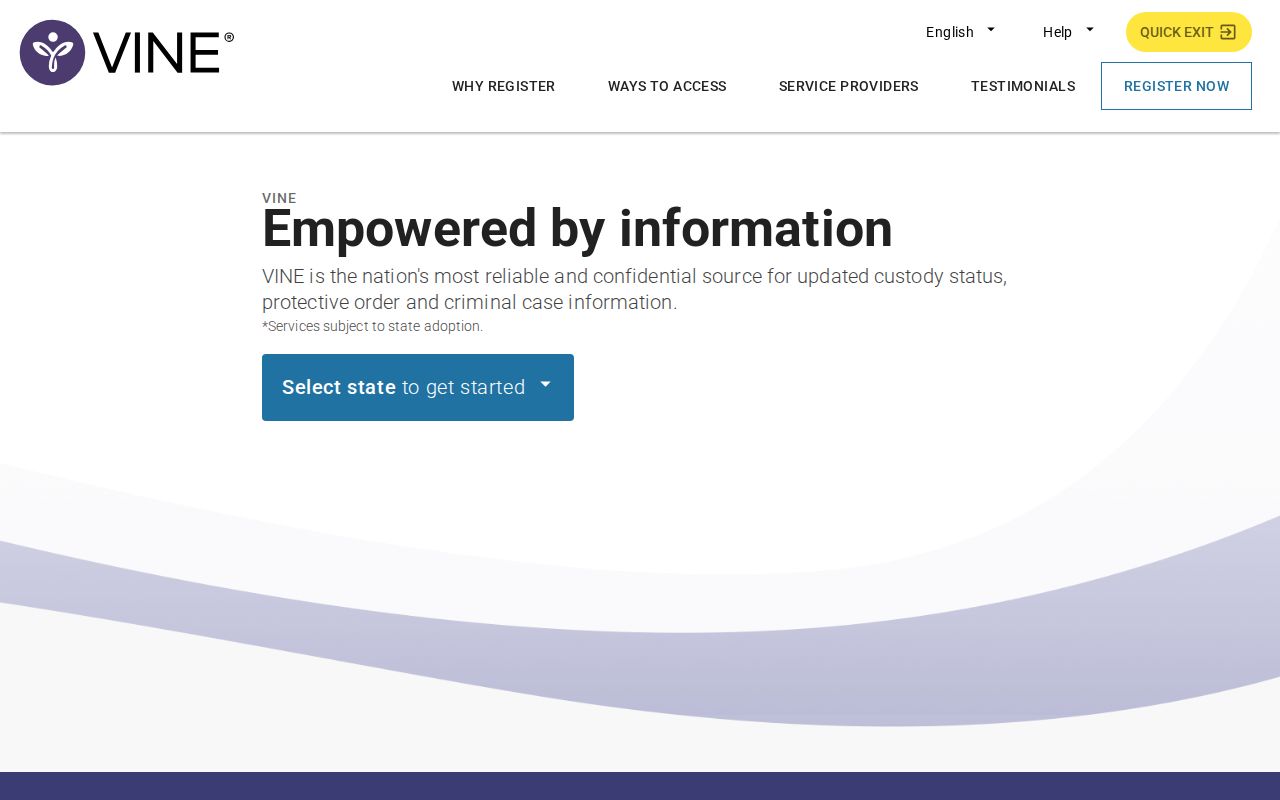
The screen is a starting point; the facility's current record and release sheet control the final interpretation.
Parker VINE Release Fields
Field availability varies by participating agency. Read only what the live result displays and do not import fields from a different county. An event time can prompt direct confirmation, but it is not necessarily the jail's final release timestamp.
| Field | How to read it |
|---|---|
| Name | Compare with the booked legal identity. |
| Offender or booking ID | Use it to reduce false matches. |
| Facility | Identifies the custodian supplying the record. |
| Custody/status | Preserve the exact phrase instead of paraphrasing it. |
| Event and date | A notification lead that still needs facility confirmation. |
No result proves very little. The spelling may differ, the feed may lag, the agency may not expose that record, or the person may have transferred. Repeat the identity check, then contact the last known custodian.
Register Parker Release Alerts
Register only after selecting the correct person. Offered phone, email, or text methods and event types can differ by agency, so the live form controls.
- Open the matched record and select the notification control.
- Choose an available contact method and enter it accurately.
- For telephone calls, create the requested four-digit PIN.
- Complete the email or text verification when required.
- Save the registration confirmation without publishing private contact details.
The telephone PIN acknowledges receipt and stops repeat calls. An alert should trigger a direct call and record request. If no alert arrives, do not infer that the person stayed in custody because registrations, delivery, and source data can fail or change.
Confirm Parker VINE Events
A Parker County release may mean bond, time served, a court order, or another community outcome. It may also be a handoff to TDCJ, another jail, USMS, or ICE. VINE's status should therefore be paired with the booking desk answer and a written record stating release type and destination.
Search the Parker court portal when the event followed a bond, dismissal, judgment, or sentence. The docket explains legal action but may precede physical processing. For state prison, use the TDCJ offender search and direct status lines. For BOP custody, use the federal locator; VINE is not a substitute.
Parker County Notification Layer
Parker's official local referrals make VINE more than a generic statewide suggestion. The Sheriff links VINELink from its own site, and the District Attorney routes custody questions among Parker records, VINE, TDCJ, and criminal-case sources. That routing reflects the core rule: start with the last custodian, then use the notification tool built for that system.
For Parker Jail, VINE supports a specific-person alert while the booking desk and Sheriff record confirm the event. For a person sentenced to TDCJ, IVSS can provide subscribed parole-review, release-to-supervision, discharge, and warrant-action events. Contact TDCJ Victim Services at 800-848-4284 when help with state notifications is needed. The DPS registry is only for people with a Chapter 62 registration duty and is not a general release service.
Parker Release Alert Boundaries
Choose the channel by custody system. Parker VINE is the county-jail notification path. IVSS is the state-prison and parole event layer. The BOP Locator covers federal prisoners and many released federal records after 1982. ICE's locator is current-purpose and cannot prove a historical immigration release from a miss.
| Last custodian | Notification or lookup | Confirmation |
|---|---|---|
| Parker County Jail | Texas VINE | Booking desk and release sheet |
| TDCJ | IVSS and TDCJ search | TDCJ status line or discharge record |
| BOP | BOP Locator | BOP record or federal docket |
| ICE or USMS | Agency locator or docket | Agency record or FOIA |
A transfer ends one custodian's control but may begin another's. Record the destination before calling the event a community release.
Parker VINE Identity Checks
Common names require more than a visual match. Compare the offender or booking identifier, date of birth or age when shown, facility, court case, and custody dates. A wildcard county search can find spelling variants but also increases false matches. Describe a result as possible until the public identifiers align.
Do not publish private notification details. Registration confirmations, phone numbers, email addresses, and PINs should remain with the registrant. Save only the source, date checked, and exact public event wording needed to verify the custody question.
The Parker Jail & Bond Records gateway can supply a second identity check for county custody. The Parker court Smart Search adds case context. If a VINE status conflicts with either source, call the booking desk instead of choosing the most convenient answer.
Parker VINE Release Meaning
Released and out of custody are broad notification terms. The county release record should clarify whether the event involved bond, time served, court order, probation, or transfer. A release date without its type and destination can hide continued custody under another agency.
Bond is a useful example. A court can set bond before it is posted, and posting can precede jail processing. Weatherford policy also recognizes a post-bond hold in qualifying family-violence matters. For that reason, a court bond entry, VINE event, and physical exit time may all differ.
If TDCJ appears in the destination, stop using county VINE as the main state-prison source. Search TDCJ by number, read the exact Projected Release Date and parole-review fields, and use IVSS for later events. If USMS or ICE appears, switch to the receiving federal channel. The destination decides the next lookup.
Respond to Parker VINE Alerts
A release alert should start a short verification chain. Save the exact event language and time, but avoid copying more personal information than needed. Call Parker County Jail and ask whether the person left for the community or transferred. If the booking desk confirms release, request the written date, time, type, and destination. If staff identify another custodian, move to that agency's official locator.
Next, read the criminal case. A bond action can explain the legal authority while the jail sheet establishes the physical event. A dismissal may coexist with another hold. Time served should be checked against the judgment. Release to probation should lead to Parker CSCD and the sentencing court. These sources complement VINE instead of duplicating it.
Keep the registration active only as long as the offered system and user's needs require. The four-digit telephone PIN acknowledges a call and prevents repeat dialing. Email or text channels may require separate verification. Offered methods can change, so never promise that all people or all events support each channel.
No Parker VINE Result
A no-match is inconclusive. Recheck first and last name, spelling, and any available booking identifier. Confirm that Texas and the correct facility are selected. A recent booking may not yet appear, an older record may not remain visible, and a participating feed may expose fewer fields than expected.
Call the last known custodian when the identity still does not resolve. Parker's booking desk can answer the narrow current-custody question and direct a caller after a transfer. For written proof, use the Sheriff's formal Public Information Act channel rather than asking VINE to create a release record.
Do not substitute the DPS sex-offender registry. It covers only people with an active statutory registration duty. Likewise, press releases and social posts concern selected cases, not a complete custody feed. The absence of a person from any one of those channels does not establish release.
Parker Historical Release Proof
VINE is strongest as a timely alert. Historical proof belongs with the records created by the jail, court, or later custodian. A Parker request should identify legal name, date of birth, booking number if known, and a narrow date range. Ask for public booking and release fields plus the receiving agency if transferred.
For a person later committed to TDCJ, retain the Parker judgment and search the state record. Fully discharged information may not remain publicly visible in every case, so use TDCJ Public Information for the release or discharge history. For federal custody, BOP's locator covers many released records after 1982, while older federal prison history may require the National Archives.
Public Record Search
Sponsored Results